
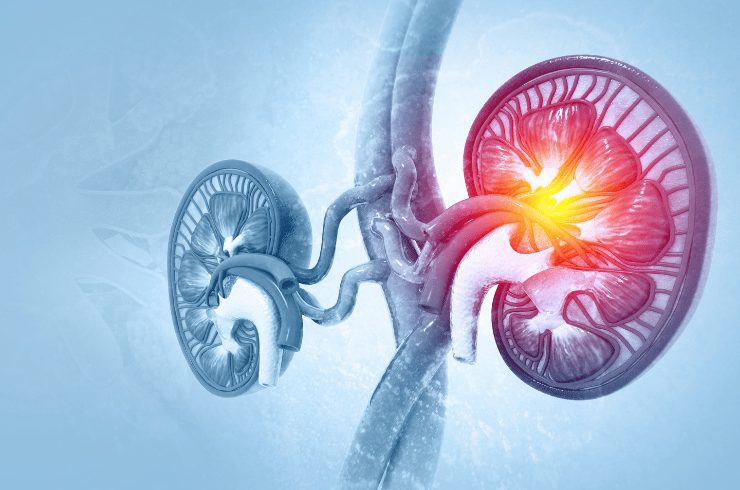
A renal transplant, also known as a kidney transplant, is a surgical procedure in which a healthy kidney from a suitable donor is placed into a patient whose kidneys are no longer functioning adequately. It is an important treatment option for selected patients with advanced or end-stage kidney disease. At Sree Maatre Gastro & Urology Clinic, Dr. Nuthalapati Venkata Naga Praneeth, a Consultant Robotic & Reconstructive Urologist, Microscopic Andrologist and Renal Transplant Surgeon, provides specialized urological expertise for patients requiring kidney transplant-related surgical care.
Healthy kidneys filter waste and excess fluid from the blood and help maintain important functions within the body. When kidney function becomes severely impaired, dialysis or kidney transplantation may be considered depending on the patient’s medical condition.
A kidney transplant involves placing the donor kidney into the recipient’s body and connecting it to the appropriate blood vessels and urinary tract structures. Careful evaluation is required before determining whether transplantation is suitable.
Renal transplantation involves a multidisciplinary process and requires detailed assessment of both the recipient and donor. Evaluation may include:
The transplant team uses these findings to determine suitability and develop an individualized surgical plan.
During renal transplant surgery, the donor kidney is placed in the recipient’s lower abdomen and connected to the recipient’s blood vessels. The ureter from the transplanted kidney is connected to the urinary bladder, allowing urine to pass normally.
The surgical approach and technical considerations depend on the patient’s anatomy, previous surgeries, medical history and transplant requirements. Dr. Praneeth’s expertise in genito-urinary surgery and renal transplantation supports specialized surgical management for appropriate patients.
Successful transplantation requires continued medical monitoring after surgery. Patients generally need regular follow-up to monitor kidney function and overall health. Anti-rejection medicines are an important part of post-transplant care and must be taken strictly according to the transplant team’s recommendations.
Follow-up may include:
Dr. Nuthalapati Venkata Naga Praneeth is a Renal Transplant Surgeon with specialized training in genito-urinary surgery and expertise in advanced urological procedures. His practice also includes robotic, reconstructive, laparoscopic, endoscopic and minimally invasive urology.
At Sree Maatre Gastro & Urology Clinic, Renal Transplant Surgery is approached with careful evaluation, surgical expertise, patient education and a strong focus on safety. Patients can receive individualized guidance regarding their transplant-related surgical needs and appropriate next steps.